
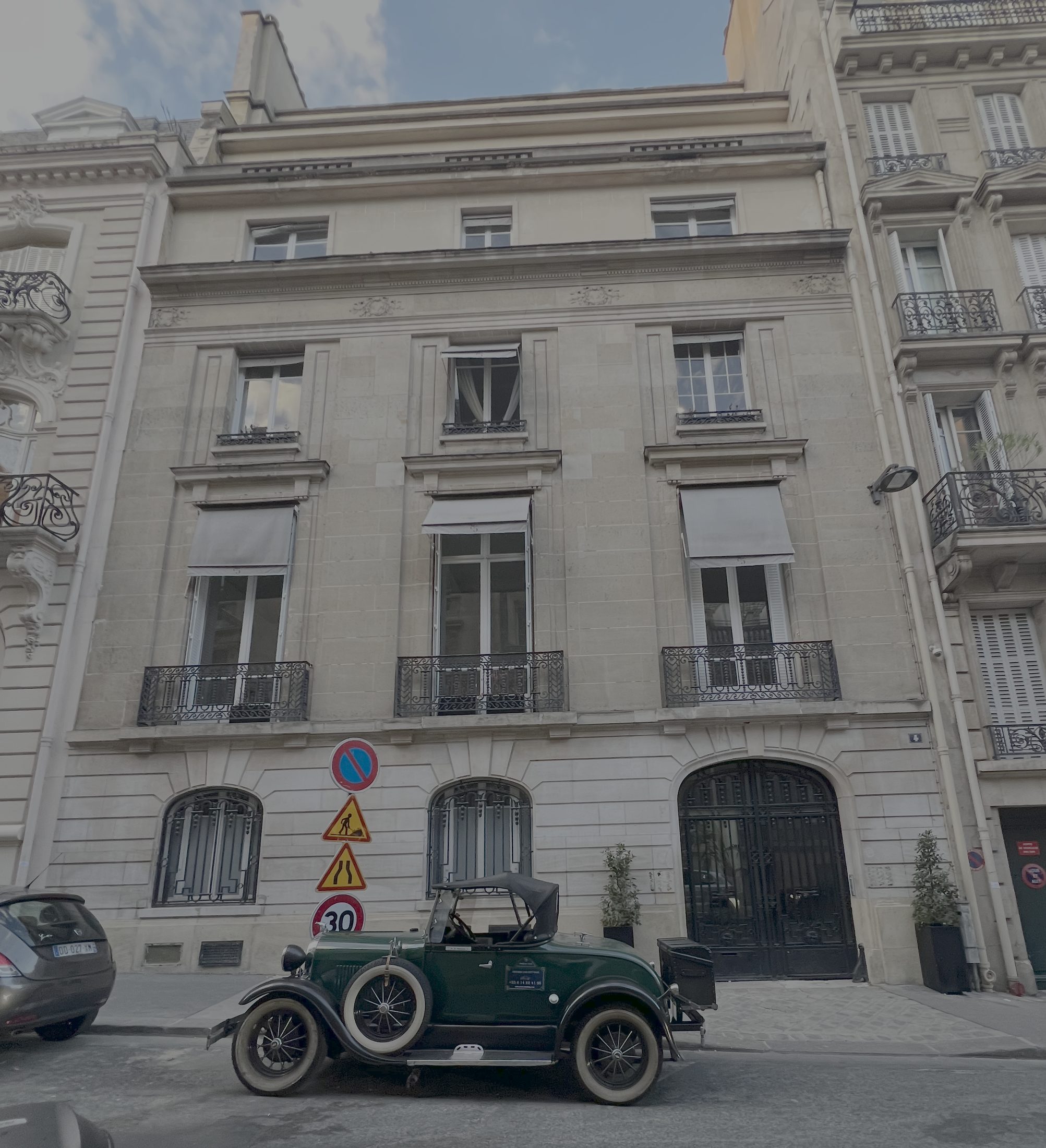
The façade of Cimarosa Residences

Paris 16ème

Butte de Chaillot

In the heart of the Butte de Chaillot, 2 minutes from Métro Boissière, between the Arc de Triomphe and the Trocadéro.

The neighborhood

A quiet street in the heart of the 16th

Cimarosa Residences stands in the heart of the Butte de Chaillot, in Paris 16ème, 2 minutes from Métro Boissière, between the Arc de Triomphe and the Trocadéro. We are next door to embassies, so the street has additional police presence. The apartments themselves remain very quiet and private.

The exact address, door codes and arrival instructions are shared with confirmed guests in the private guest guide.

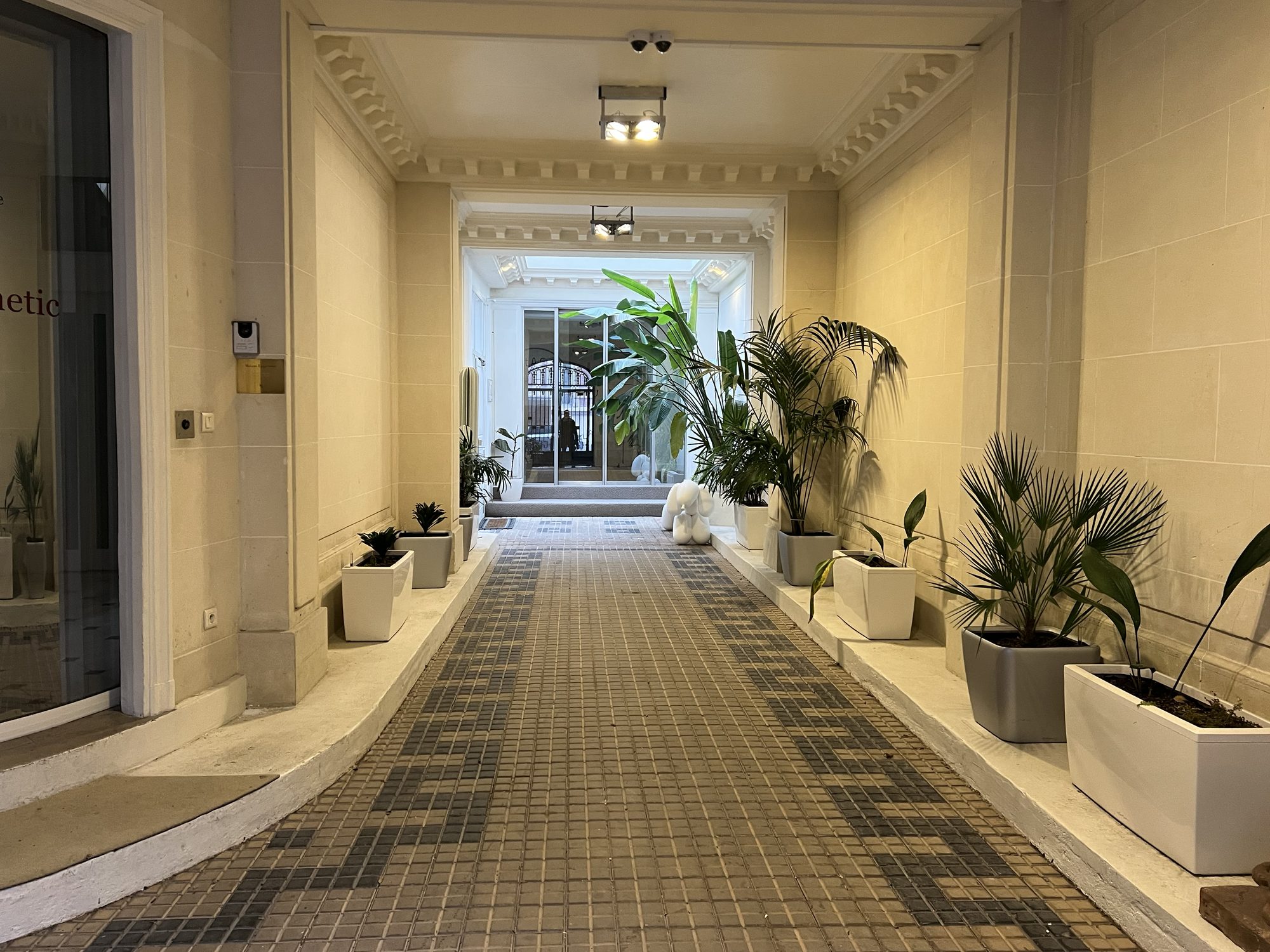
Mosaic hallway leading to the private elevator

Around the residence

The Butte de Chaillot and its landmarks

A short walk takes you through one of Paris's most settled residential quarters, between the Arc de Triomphe and the Trocadéro. Here is a little of the history of the places you will pass.

The Butte de Chaillot

The residence stands on the hill of Chaillot, a rise on the right bank that once looked out over a wider bend of the Seine. The old village of Chaillot was brought into Paris in 1659; the southern slope, then part of Passy, followed in 1860. For centuries the hill was a place of country houses and pleasure grounds just beyond the city. In the later nineteenth century it was built up into the quiet residential quarter it remains today.

The Jardins du Trocadéro and the Eiffel Tower, seen from the Palais de Chaillot
Photograph by NonOmnisMoriar, CC BY-SA 3.0

The Trocadéro

At the crest of the hill, the Place du Trocadéro opens toward the Seine and the Eiffel Tower. The name recalls a French victory at the Trocadero fort in Cádiz in 1823. A first palace was raised here for the Exposition Universelle of 1878; it was replaced, for the Exposition of 1937, by the present Palais de Chaillot, two curved wings with a wide terrace between them. The gardens fall away toward the river.

The Arc de Triomphe on Place Charles-de-Gaulle, seen from the west
Photograph by Thomas Bresson, CC BY-SA 4.0

The Arc de Triomphe

A short walk up Avenue Kléber brings you to the Arc de Triomphe, at the top of the Champs-Élysées on Place Charles-de-Gaulle. Napoleon I commissioned the arch in 1806, after Austerlitz; it was completed in 1836, to the design of Jean-François Chalgrin. Since 1921 the Tomb of the Unknown Soldier has lain beneath the vault, with a flame that is rekindled every evening. From the terrace, the twelve avenues of the Étoile spread out across the city.

Place des États-Unis, a leafy square with the statue of Lafayette and Washington
Photograph by Mbzt, CC BY 3.0

Place des États-Unis

A leafy square a short walk from the residence, Place des États-Unis was laid out after the old Passy water reservoirs were taken down and rebuilt nearby. It was first named Place de Bitche, after a Moselle town that held out in the Franco-Prussian War. In 1881 the American minister, Levi P. Morton, established the United States legation on the square, and the name was changed so that the embassy would not sit on a square whose former title sounded, in English, like an insult.

Place Victor-Hugo, a circular square with a fountain at its centre
Photograph by Celette, CC BY-SA 3.0

Place Victor-Hugo

To the west, Place Victor-Hugo is a circular square from which streets radiate in a star — the centre of a layout of the Plaine de Passy begun in 1825. It has carried several names. On the day of Victor Hugo's death in 1885, the municipal council gave the square his name. For thirteen years a wooden hippodrome stood here, until a fire destroyed it in 1869. A Métro station opened on the square in 1900, among the earliest on the line from Étoile.